DNA COLOR: #11EE3F
SOURCE: MET // COLLISION ARCHIVE
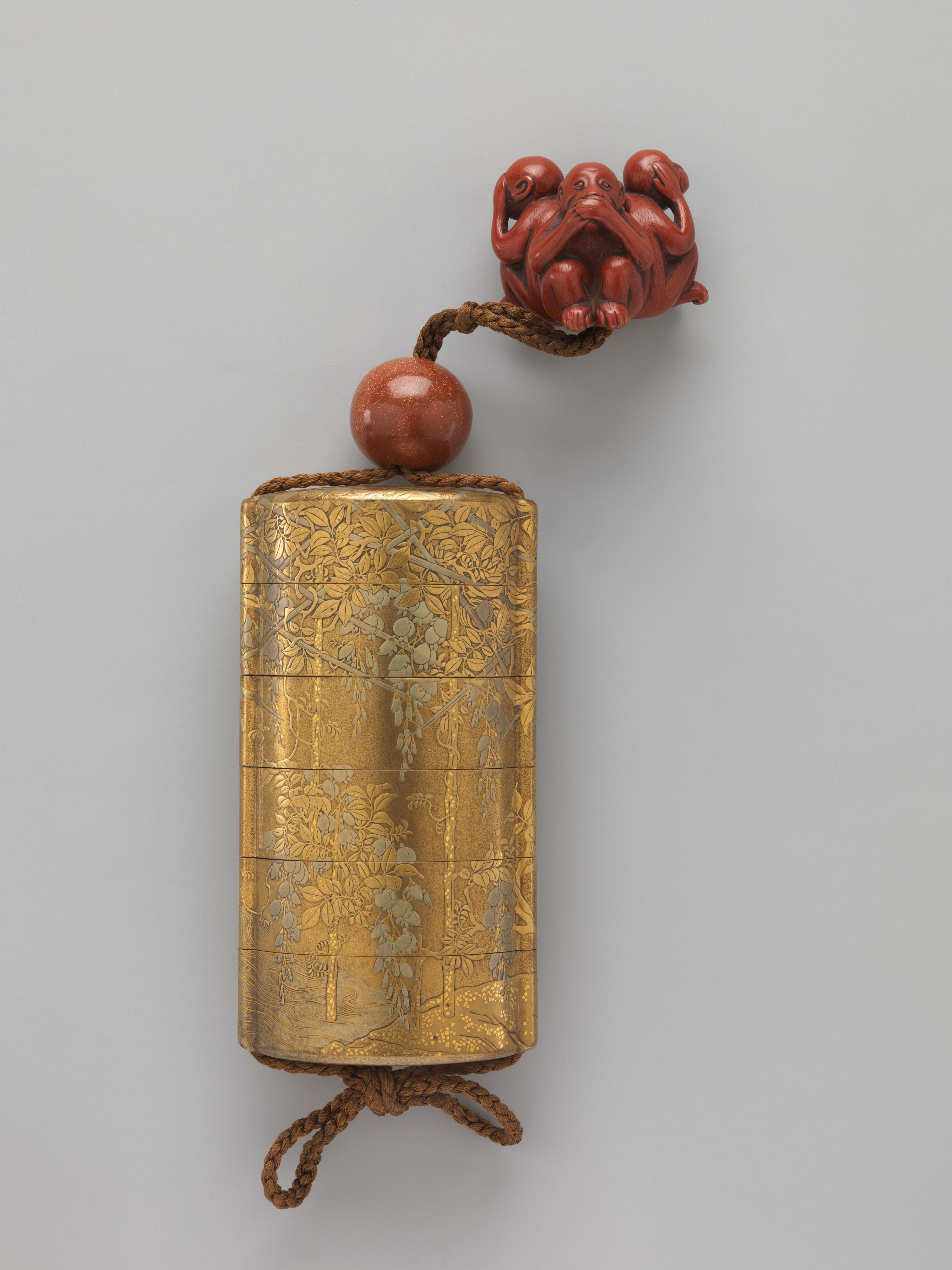
Evolution Analysis: Inrō with Wisteria Trellis
The **Inrō with Wisteria Trellis** represents a critical intersectional node in the aesthetic evolution of **Japan** heritage. Historically situated within the vibrant temporal context of **mid-19th century**, this piece demonstrates a masterful command over **Inrō: five cases; lacquered wood with gold and silver takamaki-e, hiramaki-e, togidashimaki-e, cutout gold foil application on gold lacquer ground; ojime: goldstone (glass) bead; netsuke: three wise monkeys; carved wood with red lacquer** that predates modern industrial processing by several centuries. By rigorously deconstructing its cultural origins, Liru Design Lab seeks to re-establish a profound connection between ancient tactile wisdom and the high-tech demands of the 2026 fashion market. This artifact is a silent authority on the principles of balance and proportion, offering us an unrivaled dataset of patterns and textures that are ripe for hyper-modern reinterpretation. It serves as the foundational DNA for our current exploration of 'Neo-Heritage' fashion, acting as a bridge between the spiritual craftsmanship of the past and the functional, utility-driven demands of the future luxury sector.
Technical Material Decoding
From a technical perspective, the intricate application of **Inrō: five cases; lacquered wood with gold and silver takamaki-e, hiramaki-e, togidashimaki-e, cutout gold foil application on gold lacquer ground; ojime: goldstone (glass) bead; netsuke: three wise monkeys; carved wood with red lacquer** in this **Japan** specimen reveals a highly complex internal morphology that warrants deep scientific inquiry. Our high-resolution morphological mapping indicates that the fiber density of the **Inrō: five cases; lacquered wood with gold and silver takamaki-e, hiramaki-e, togidashimaki-e, cutout gold foil application on gold lacquer ground; ojime: goldstone (glass) bead; netsuke: three wise monkeys; carved wood with red lacquer** utilized here was a result of an incredibly labor-intensive process, where durability and longevity were prioritized alongside ornamental beauty. In our 2026 FW outerwear development cycle, we are utilizing these specific **Inrō: five cases; lacquered wood with gold and silver takamaki-e, hiramaki-e, togidashimaki-e, cutout gold foil application on gold lacquer ground; ojime: goldstone (glass) bead; netsuke: three wise monkeys; carved wood with red lacquer** tension points to inspire new, eco-friendly synthetic polymers that mimic the natural resilience found in this **mid-19th century** artifact. By decoding the molecular arrangement of the fibers, AZWK is pioneering a 'Biomimetic Craft' approach, where the traditional Inrō: five cases; lacquered wood with gold and silver takamaki-e, hiramaki-e, togidashimaki-e, cutout gold foil application on gold lacquer ground; ojime: goldstone (glass) bead; netsuke: three wise monkeys; carved wood with red lacquer weave is translated into advanced digital knitting matrices, allowing us to produce garments that possess the same historical weight and tactile depth as the original specimen while adhering to modern ESG standards.
Aesthetic Dialogue & Spatial Morphology
The ornamental motifs found on the surface of the **Inrō with Wisteria Trellis** reflect a deep-seated cultural symbolism that transcends simple decoration. These patterns represent a complex spatial dialogue between the **Japan** identity and its physical environment, creating what our studio calls an 'Ornamental Pulse'. We find that the silhouette suggested by this **mid-19th century** piece fundamentally challenges the rigid, linear boundaries of contemporary Western tailoring. It offers a more fluid, gender-neutral approach to volume and proportion that aligns perfectly with the aesthetic shifts we anticipate for the 2026 market. By isolating these Inrō: five cases; lacquered wood with gold and silver takamaki-e, hiramaki-e, togidashimaki-e, cutout gold foil application on gold lacquer ground; ojime: goldstone (glass) bead; netsuke: three wise monkeys; carved wood with red lacquer motifs, we are creating a new visual lexicon for Liru Fashion's premium accessories line, where each pattern is not just an image, but a carrier of historical narrative. This 'Visual Morphology' allows our designs to move beyond the transient nature of trend cycles and establish themselves as timeless industrial artifacts.
The Liru Vision: Cyber-Antiquity for FW26
Ultimately, the **Inrō with Wisteria Trellis** serves as the cornerstone of our 'Cyber-Antiquity' collection for the FW26 season. We are not merely manufacturing clothes; we are manufacturing history. By leveraging the tectonic shifts in 2026 consumer behavior towards sustainable luxury and brand transparency, we are positioning Liru Fashion as a global leader in the 'Phygital' fashion space. This **Japan** artifact’s Inrō: five cases; lacquered wood with gold and silver takamaki-e, hiramaki-e, togidashimaki-e, cutout gold foil application on gold lacquer ground; ojime: goldstone (glass) bead; netsuke: three wise monkeys; carved wood with red lacquer essence will be the heartbeat of our next successful international launch, proving that the most successful designs of the future are those that are most deeply rooted in the tectonic movements of fashion history. Our investment in deconstructing this **mid-19th century** specimen ensures that our 2026 strategic roadmap is built on a foundation of aesthetic authority and technological innovation, allowing us to capture the hearts and wallets of a generation that values substance over surface.
The Studio Insight
Liru Studio: Map the structural density of this Inrō: five cases; lacquered wood with gold and silver takamaki-e, hiramaki-e, togidashimaki-e, cutout gold foil application on gold lacquer ground; ojime: goldstone (glass) bead; netsuke: three wise monkeys; carved wood with red lacquer piece into our FW26 premium outerwear collection to leverage the 'Heritage-Tech' trend.